

For years, the Dangote Refinery was something Nigerians could mostly watch from the outside.
For years, the conversation around Africa has often focused on what is missing.
Poor infrastructure. Limited access to capital. Unemployment. Weak systems. Safety concerns. Difficult business environments.
But there is another way to look at the continent.
The same problems that frustrate Africans can also represent some of Africa's biggest business opportunities.
And increasingly, people outside the continent are beginning to see them.
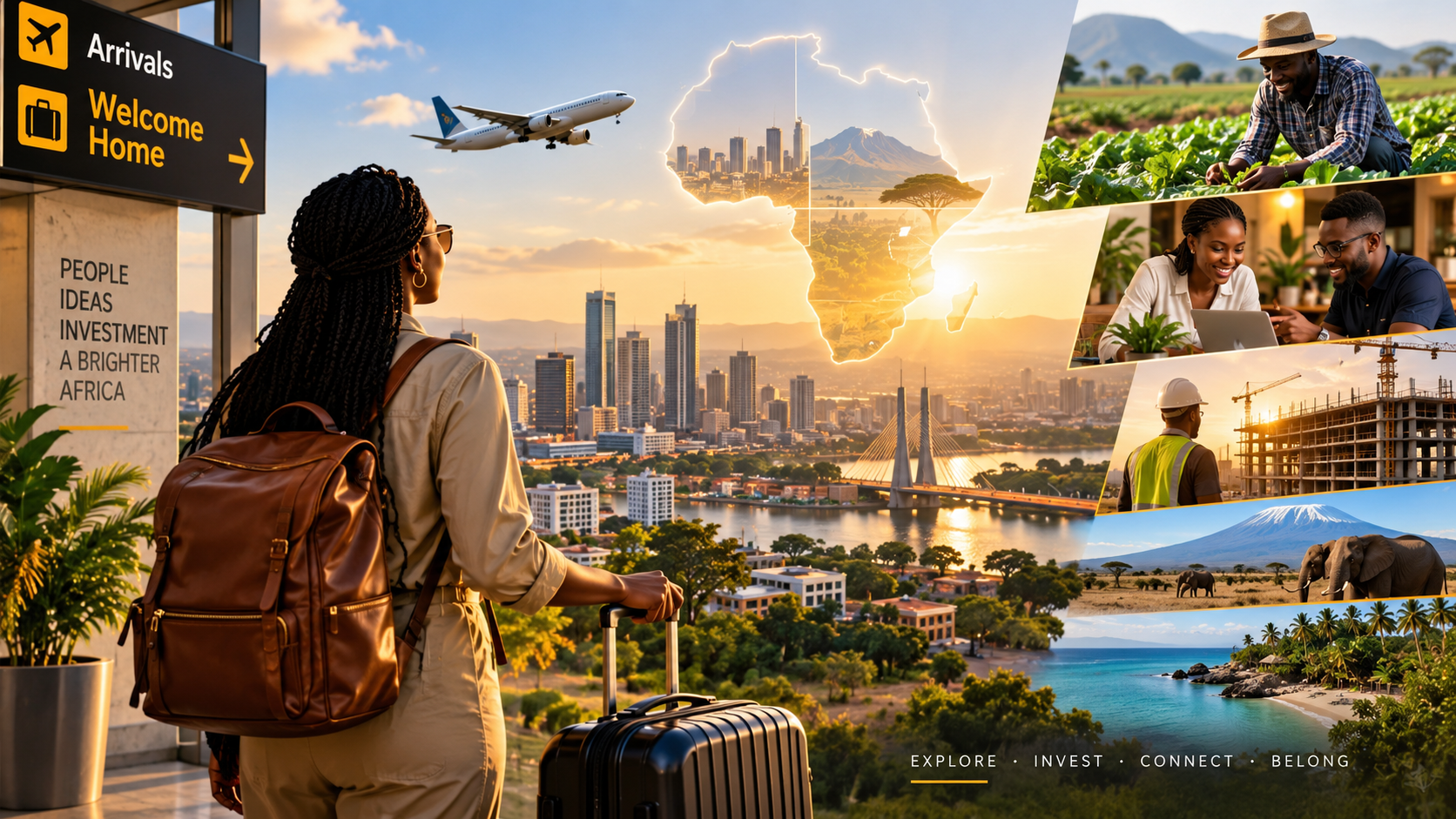
From the United Kingdom and United States to Canada and other parts of Europe, members of the African diaspora are paying closer attention to what is happening across Africa—not just because they want to return home, but because they see opportunities to participate in the continent's growth.
A New Interest in Africa
The interest goes beyond simply visiting family.
Some members of the diaspora want to return for holidays and experience Africa differently. Others are considering starting businesses, buying property, investing in agriculture or exploring opportunities that may not exist in their current markets.
For others, it is simply about reconnecting with the continent.
That shift matters.
Africa is home to a rapidly growing population, expanding cities, emerging businesses and enormous natural and agricultural resources. Yet many of these opportunities remain difficult for outsiders—and even Africans living abroad—to access.
The challenge is often not a lack of interest.
It is a lack of trusted access.
The Opportunity Is Bigger Than Tourism
When people think about returning to Africa, tourism is usually one of the first things that comes to mind.
Safaris. Beaches. Food. Music. Festivals. Historical sites.
But there is another side to experiencing Africa.
Imagine a visitor coming to the continent and going beyond the usual tourist attractions.
They could visit a working farm, meet the entrepreneurs running a growing local business, explore a vineyard, learn how agricultural products are processed, visit new infrastructure projects and experience the communities creating them.
That kind of experience changes the relationship between the diaspora and Africa.
You are no longer simply visiting Africa.
You are beginning to understand how Africa works.
Africa's Problems Are Also Investment Opportunities
One of the most interesting ideas emerging from this conversation is that the continent's challenges can reveal where opportunities exist.
Agriculture needs better systems.
Food production needs more processing.
Cities need housing and infrastructure.
Businesses need better technology.
Communities need reliable services.
These are not merely problems for governments to solve.
They are also areas where entrepreneurs, investors and businesses can create value.
For someone living abroad, this can create an opportunity to bring capital, knowledge, networks or expertise into sectors that are still developing.
But identifying an opportunity is only the first step.
Knowing how to enter the market is often much harder.
The Diaspora Has Money. What It Often Lacks Is Access.
A person living in London, Toronto or New York may have the financial capacity to invest in an African business.
But questions quickly emerge.
Who can they trust?
Who understands the local market?
Where should they invest?
How do they verify a business?
Who can help them navigate the regulations?
How do they find reliable people on the ground?
And perhaps most importantly:
How do they know they are making the right decision?
Distance makes these questions more difficult.
A person can research a country online for months and still have little understanding of what it actually feels like to operate there.
That is why trusted networks matter.
Building a Bridge Between the Diaspora and Africa
Africa does not necessarily need to convince the diaspora that opportunities exist.
Many people already believe they do.
What is missing is often a reliable bridge between interest and action.
That bridge could connect people in the diaspora with:
- Local entrepreneurs
- Agricultural businesses
- Property opportunities
- Tourism operators
- Manufacturers
- Technology companies
- Infrastructure projects
- Professional service providers
- Trusted local communities
Instead of asking someone to figure everything out alone, the ecosystem can make it easier for them to discover opportunities and make informed decisions.
Returning Home Could Mean More Than Coming Back
The idea of returning to Africa is also changing.
It does not necessarily mean permanently relocating.
Someone can live abroad and still participate in Africa's growth.
They can invest in a business.
Support an agricultural project.
Build a property.
Partner with a local entrepreneur.
Visit regularly.
Bring skills and networks.
Create jobs.
Or simply spend money within local communities and businesses.
The relationship between Africa and its diaspora does not have to be defined by physical residence.
It can also be defined by participation.
The Opportunity Is There, But Trust Comes First
Africa's potential is undeniable, but optimism alone is not enough.
Investors and visitors need reliable information. They need trustworthy partners. They need transparency and local knowledge.
The goal should not be to sell an idealised version of Africa.
It should be to help people experience the continent as it really is—its opportunities, challenges, people, businesses and communities.
That is where meaningful connections can begin.
Because Africa does not simply need more people looking at it from the outside.
It needs more people who understand the continent well enough to participate in what is being built.
Africa's Next Growth Story Could Include the Diaspora
The next chapter of Africa's economic story may not be driven only by multinational corporations or governments.
It could also be shaped by Africans abroad returning with capital, experience, relationships and new ideas.
The opportunity is already attracting attention.
The bigger question is whether the continent can create the trusted pathways that turn that attention into investment, partnerships, tourism, entrepreneurship and long-term engagement.
Africa has the land.
It has the people.
It has the businesses.
It has the ideas.
What many people need now is a trusted way in.
And that could become one of the continent's biggest opportunities of all.
From the blog
.jpg)
.jpg)
technology, African Tech, MTN Nigeria, Telecoms, Business Growth, Data Consumption, Telecommunications, Mobile Internet
MTN Nigeria Has More Customers Than Ever. Now It Needs to Make Them Spend More
MTN Nigeria is growing at an impressive pace. Its customer base is expanding, revenue is rising, and data consumption continues to climb.
7 mins read